

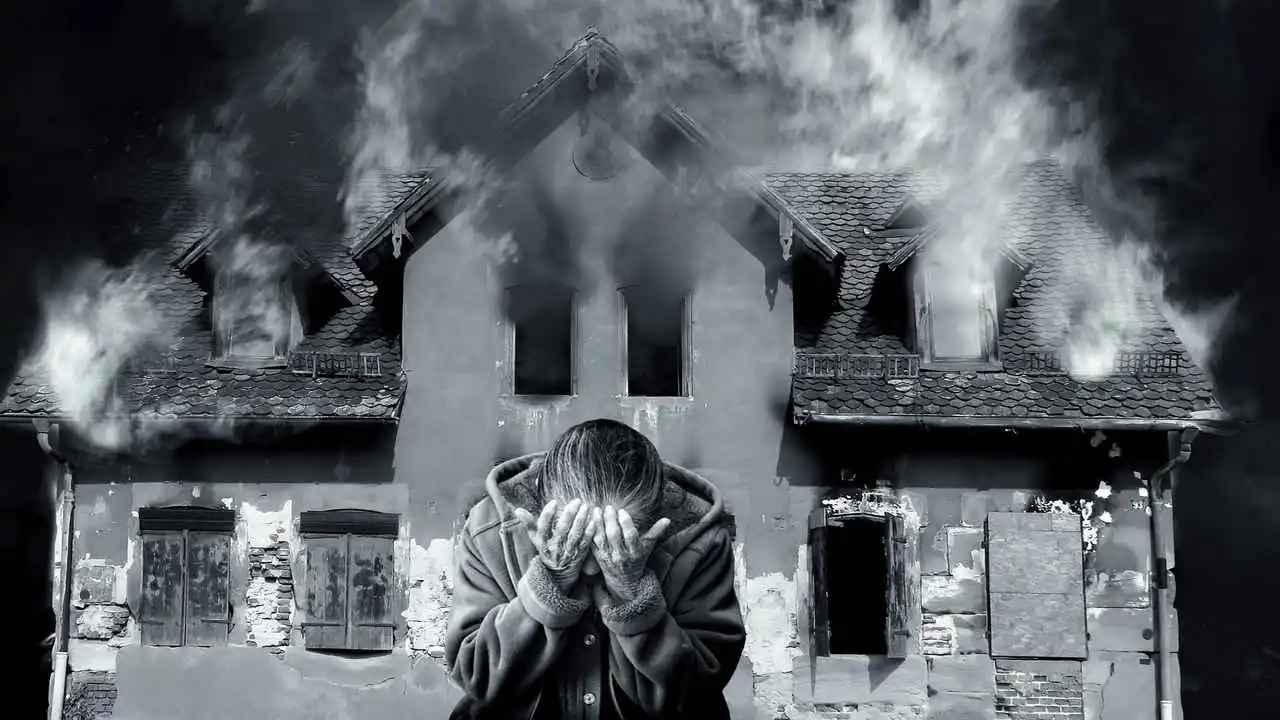
Learning to read suffering through the unchanging goodness of God
There are seasons in life when God’s ways seem terribly difficult to understand.
A prayer goes unanswered. A sickness lingers. A loss arrives without warning. A door closes that we begged God to open. In such moments, the deepest struggle is not always with the pain itself. Often, the deeper struggle is with what that pain seems to say about God.
Is He still good? Does He still care? Has His love toward us changed? Can we trust Him when His providence feels so hard?
These are not small questions. They reach into the center of faith. And they are not answered by clichés, nor by pretending that suffering is easy. They are answered only as we learn to distinguish between God’s mysterious ways in time and God’s unchanging character in Himself.
That distinction matters more than many of us realize. If we confuse God’s hidden providence with God’s revealed heart, we will almost certainly misread Him in our darkest hours.
We Often Judge God by What We Can See
When life is bright, it is easy to speak of God’s goodness. But when life becomes dark, many believers begin — sometimes quietly, sometimes desperately — to judge God’s heart by their circumstances.
If the road is painful, we assume God must be harsh.
If the answer is delayed, we assume God must be distant.
If suffering persists, we assume God must be withholding love.
That is one of suffering’s sharpest temptations: it trains us to let present experience become the interpreter of God.
But our experience is partial. Our vision is narrow. Our reading of providence is often immature. We see one chapter; God ordains the whole story. We see the wound; God sees the end from the beginning. We know what hurts; God knows what He is doing.
This does not make the pain unreal. It does mean the pain is not a trustworthy lens through which to define God.
Scripture teaches us a better way. We are not called to interpret God’s character through our circumstances. We are called to interpret our circumstances through God’s character. That is not a small adjustment. It is the difference between spiritual collapse and steady faith.
Job Shows Us That Dark Providence Does Not Mean a Dark God
Few biblical books expose this more clearly than Job.
From Job’s vantage point, life became a ruin. Loss upon loss fell upon him. His world collapsed. His body broke. His heart was crushed. And for much of the book, Job is left without the explanation the reader has been given.
That matters. Job suffers without seeing the whole frame.
He did not suffer because God had ceased to be good. He suffered under the rule of the God who is wise, sovereign, and beyond accusation. The mystery of Job is not that God’s character changed, but that God’s servant had to endure a season in which God’s ways were deeply hidden.
This is where many believers still stumble. We assume that if God’s actions are hard to understand, His character must also be suspect. But the book of Job does not permit that conclusion. Instead, it teaches us that there are moments when the providence of God will seem dark while the character of God remains unchanged.
God may do what we cannot explain without ever becoming what we should not trust.
That is a hard lesson, but it is a holy one.
Job’s friends failed precisely here. They tried to force suffering into a simple moral formula. They could not imagine a righteous man suffering under the wise and blameless rule of God without reducing everything to human deserving. But Job’s story resists that shallow logic. It reminds us that suffering is not always readable in the moment, and God is not obligated to explain Himself before He is trusted.
Lazarus Shows Us That Love May Arrive Through Delay
The same truth appears again in John 11.
Lazarus is sick. The sisters send for Jesus. The need is urgent. The request is reasonable. Yet Jesus delays.
And that delay is not presented as a failure of love. In fact, the text says that Jesus loved Martha and her sister and Lazarus — and then tells us that He stayed where He was.
That sequence unsettles us because we often assume that love must mean immediate intervention. But Jesus does not measure love by speed. He measures it by wisdom, purpose, and glory.
To Mary and Martha, the delay must have felt bewildering, perhaps even unbearable. If Jesus loved them, why did He not come sooner? Why allow the sickness to deepen? Why let death arrive?
Those questions are painfully familiar. Many believers ask them in their own seasons of sorrow. If God loves me, why did He wait? Why did He not prevent this? Why did He allow the burden to grow heavier?
John 11 teaches us that delay is not the same as indifference. Christ’s love is not disproved by His timing. His timing may confuse us, but His heart remains steadfast.
That is why we must never interpret God’s love by our circumstances. We must interpret our circumstances by His love.
God’s Character Must Interpret Our Circumstances
The heart of the matter is this: God’s character is constant, even when His providence is difficult.
He is still wise when we are confused.
He is still good when life is bitter.
He is still faithful when prayers seem unanswered.
He is still merciful when the road is long.
He is still loving when His timing wounds us.
This does not mean we will always understand what He is doing. It means we are not left without truth while we wait.
The believer’s assurance is not built on the claim that every circumstance feels kind. It is built on the certainty that God is who He has revealed Himself to be. Faith does not rest on our ability to decode every providence. Faith rests on the God who does not change.
That kind of trust is deeper than optimism. It is not denial. It is not emotional numbness. It is not pretending everything is fine. It is the settled conviction that even when God’s hand is mysterious, His heart is not evil.
The Cross Is the Final Answer to Our Fears About God
But how do we know this with confidence?
Not because every painful chapter in our lives is immediately explained.
Not because every sorrow ends quickly.
Not because we can always trace what God is doing.
We know because God has revealed His heart most clearly in Jesus Christ.
At the cross, the darkest event in history became the clearest revelation of divine love. If ever circumstances seemed to deny God’s goodness, it was there. The sinless Son of God was betrayed, condemned, mocked, pierced, and crucified. Yet in that very darkness, God was accomplishing salvation for sinners.
What looked like defeat was triumph.
What looked like abandonment was redemption.
What looked like the collapse of hope was the accomplishment of eternal mercy.
The cross teaches us never to assume that painful providence means the absence of divine love. In fact, the greatest good ever given to the world came through the darkest providence ever ordained in history.
And if God has already given us His Son, then the believer has solid ground beneath every trembling footstep. The God who did not spare His own Son is not casually cruel toward His children. His ways may wound us for a time. His providence may bewilder us deeply. But His character has been revealed in Christ, and that character is not up for revision every time our circumstances change.
Here, the believer finds more than an abstract doctrine of divine goodness. Here we see the holy love of God acting for us, not against us. The cross is not a decorative addition to our theology of suffering. It is the place where God forever silences the suspicion that He may not be for His people.
Trusting God in the Dark Is Not Easy — But It Is Safe
This means faith is not mainly the ability to explain everything. Faith is learning to rest in the God we know, even when we cannot explain what He is doing.
That kind of trust may be tearful. It may be slow. It may come with questions. It may coexist with sorrow. But it is still real faith.
Some believers imagine that trust means never feeling grief, never asking hard questions, never struggling in prayer. Scripture gives us a far more honest picture. The saints of God wept, wrestled, pleaded, and waited. But in the midst of all that, they were called back again and again to the same foundation: the Lord does not change.
So when your life feels unstable, do not anchor your soul in your shifting feelings. Do not anchor it in visible outcomes. Do not anchor it in your ability to predict what God will do next.
Anchor it in who God is.
He is the same in the valley as on the mountain.
He is the same in delay as in deliverance.
He is the same in the silence as in the song.
He is the same when the tomb is still closed and when the stone is rolled away.
A Final Word for the Weary
Perhaps you are in one of those hard seasons now. Perhaps what God is doing in your life feels painfully unclear. Perhaps you are not doubting His existence, but you are struggling to reconcile His love with your present pain.
Then do not read His character from the darkness around you. Read your darkness in light of the God who has shown His heart in Christ.
His ways may be hidden.
His timing may be slow.
His purposes may be beyond you.
But His character is not unstable.
He is still holy.
Still wise.
Still loving.
Still faithful.
Still near to His people.
And because that is true, you may cast your burdens upon Him. Not because the storm has already passed, but because the One who holds you in the storm has not changed.
When God’s ways are dark, His character is not.